
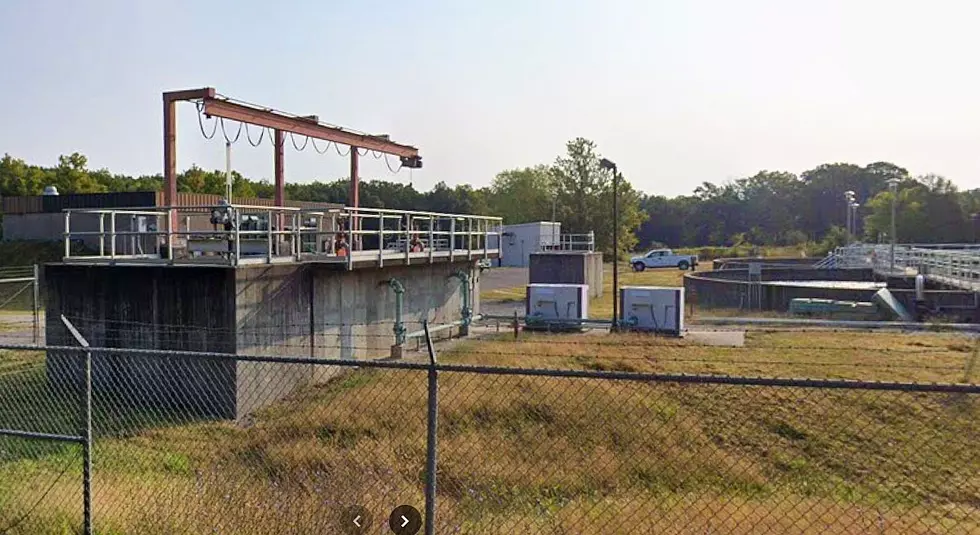
Major Improvements Needed at Sedalia’s SE Wastewater Treatment Plant
Sedalia City Council heard a sobering report from wastewater experts concerning the Southeast Wastewater Treatment Plant at 26999 Goodwill Chapel Road, on Monday night.
During a presentation near the top of the 68-minute Council meeting, Industrial Pretreatment Coordinator and Operations Crew Supervisor Brittany Wilbanks noted how most of the equipment at the plant is beyond its intended service life, with frequent breakdowns and costly repairs a daily fact of life at one of the City’s three wastewater treatment plants.

She described the plant, built in 1985, as “mostly out of sight -- out of mind” due to its location southeast of Sedalia. Even though it’s over 40 years old, the plant is still Sedalia’s newest wastewater treatment plant. It’s designed to flow 2.6 million gallons per day. Currently the flow is around 1.78 million gallons, Wilbanks said, adding that most of the inflow comes from domestic users, rather than industrial.

“A lot of money has been spent reacting to equipment failure,” Wilbanks said, in an attempt to keep the aging plant operational. She noted that recent major projects at the plant included the installation of two new blowers, repair of two mixers, replacement of two mixers, as well as an upgraded UV system, electrical repairs, and a SCADA upgrade.
Ben Maness, who oversees the day to day operations at all three wastewater plants, took over the presentation at that point and showed several photos along with facts and figures concerning the southeast treatment plant, which is regulated by the Missouri DNR.
In 2025, Sedalia contracted with Crawford, Murphy & Tilly to produce a “condition assessment” of the plant. Total cost to make those suggested repairs amounted to over $8.9 million.
“We need to stair step this over multiple fiscal years,” Maness told Council.
He added that a mechanical screen, scum pumps and skimmers at the plant haven’t worked in quite some time.
The improvements are not a “want” but rather a “need” to keep the wastewater plant operating for the next 20 – 25 years.

Some of the priorities Maness listed include an electric arc flash, a utility parallel switch gear, a UV disinfection system, a blower building to protect the blowers & compressors, a new influent structure, a new effluent flow monitor (the plant currently doesn’t have one), a grit chamber and a sludge thickening tank.
Councilman Redford asked Maness point blank what the overall cost will be to upgrade systems at the plant and Maness replied it would be over $12 million.
And further steps would be needed beyond FY 29-30, Maness stated.

